
We often celebrate noise over competence.
Martin Gutmann made this point beautifully in his TEDx talk “Why do we celebrate incompetent leaders?”
He compared two explorers: Shackleton, the disaster-prone adventurer who became a legend, and Amundsen, the quietly competent planner who actually reached both poles and returned safely. Guess which one we still write books about? The one with the most drama.

The same thing happens inside companies every day.
We reward visibility over consistency. We remember the people who “fought the storm,” not those who avoided it in the first place. But in business - especially in sales - competence without visibility often goes unnoticed. And that’s the trap.
You’re not just a Rep. You’re the main character in a bigger story: Yours.
Before being a sales Rep, you’re an individual - with your own ambitions, motivations, and aspirations. Some people sell to hit their number and make money. Others are playing a longer game: building a career, a reputation, a leadership identity.
Whichever path you choose, the way you act inside your organization defines how others perceive your value.
Your manager, marketing, product, or leadership team all build a mental image of you over time. That image isn’t always based on performance - it’s based on narrative. The stories people tell about you. The meetings you’re in. The updates you send. The energy you project.
And unless you’re deliberate about shaping that story, you’ll wake up one day realizing someone else has already written it for you.
Herminia Ibarra: Becoming by doing - and by telling
Herminia Ibarra, in Act Like a Leader, Think Like a Leader, argues that professional growth starts when you stop clinging to a fixed identity. You become a leader by experimenting with new behaviors, and by reframing your story so others can see the transformation happening.
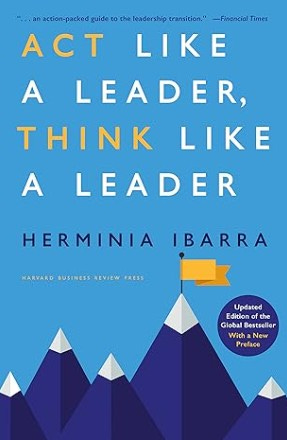
In other words: performance alone doesn’t change perception. You have to narrate the evolution.
That’s what most salespeople forget.
They’re laser-focused on deals, customers, and targets - the external game. But there’s also an internal game, and ignoring it is like playing football while leaving your goal wide open. If you don’t manage your internal narrative, someone else will fill in the blanks.
Your silence isn’t humility - it’s self-erasure.
Performance without narrative is invisible
Let’s be honest: overachieving your target doesn’t guarantee visibility. If your focus is only on the external scoreboard, the company may celebrate “the number” without remembering the person behind it.
If there’s a success note written about a deal you closed, be the one writing it.
If there’s a postmortem about a deal you lost, be the one framing the learnings.
That’s not bragging - it’s authorship.
You’re not inflating your ego; you’re giving shape and context to your own contribution.
You’re ensuring the company’s collective story includes you, in your own voice.
Visibility isn’t vanity - it’s alignment
There’s a difference between making noise and being known. Controlling your narrative isn’t about chasing credit; it’s about creating clarity. It’s about helping your organization connect your name to the outcomes you drive. If you want to share the success with others, it is your choice.
Herminia Ibarra found that professionals who succeed in transitions don’t just perform -they make their evolution visible. They experiment publicly. They let others see what they’re trying, learning, and refining.
In sales, that means treating your internal audience like your market. Don’t assume they’ll “get it.” Make it easy for them to understand who you are, what you bring, and where you’re heading.
Failures matter too
Every Rep has bad quarters, lost deals, or projects that collapse mid-way. The difference between being judged and being respected often lies in how you tell that story.
When you own your failures - when you frame them as lessons, insights, or stepping stones - you build credibility. You show maturity. You demonstrate that you don’t just chase numbers; you learn from patterns.
That’s narrative power.
Because when you’re in control of your story, even a loss can enhance your reputation.
You’re the captain of your own ship
Sales can feel like sailing through unpredictable waters - currents shifting, winds changing, icebergs ahead. You can’t control every condition, but you can control your course.
And part of that course is writing your own logbook.
Don’t let others interpret your journey. Don’t rely on your results to speak for themselves - they rarely do. Shape the perception that travels with you: the mix of competence, integrity, and awareness that defines your professional identity.
Because if you don’t tell your story, someone else will. And when that happens, your silence isn’t humility - it’s self-erasure.
Closing Thought
Sales is storytelling. But the first story you must learn to tell is your own.
#B2BSales #LeadershipMindset #ControlYourNarrative #OwnYourStory #TheB2BSpecialist