
Enterprise sales is less about persuasion than most people think.
It is about navigation.
Navigation through two organizations simultaneously - each with its own power structures, internal dependencies, incentives, and resistance to change.
Most sales methodologies miss this entirely.
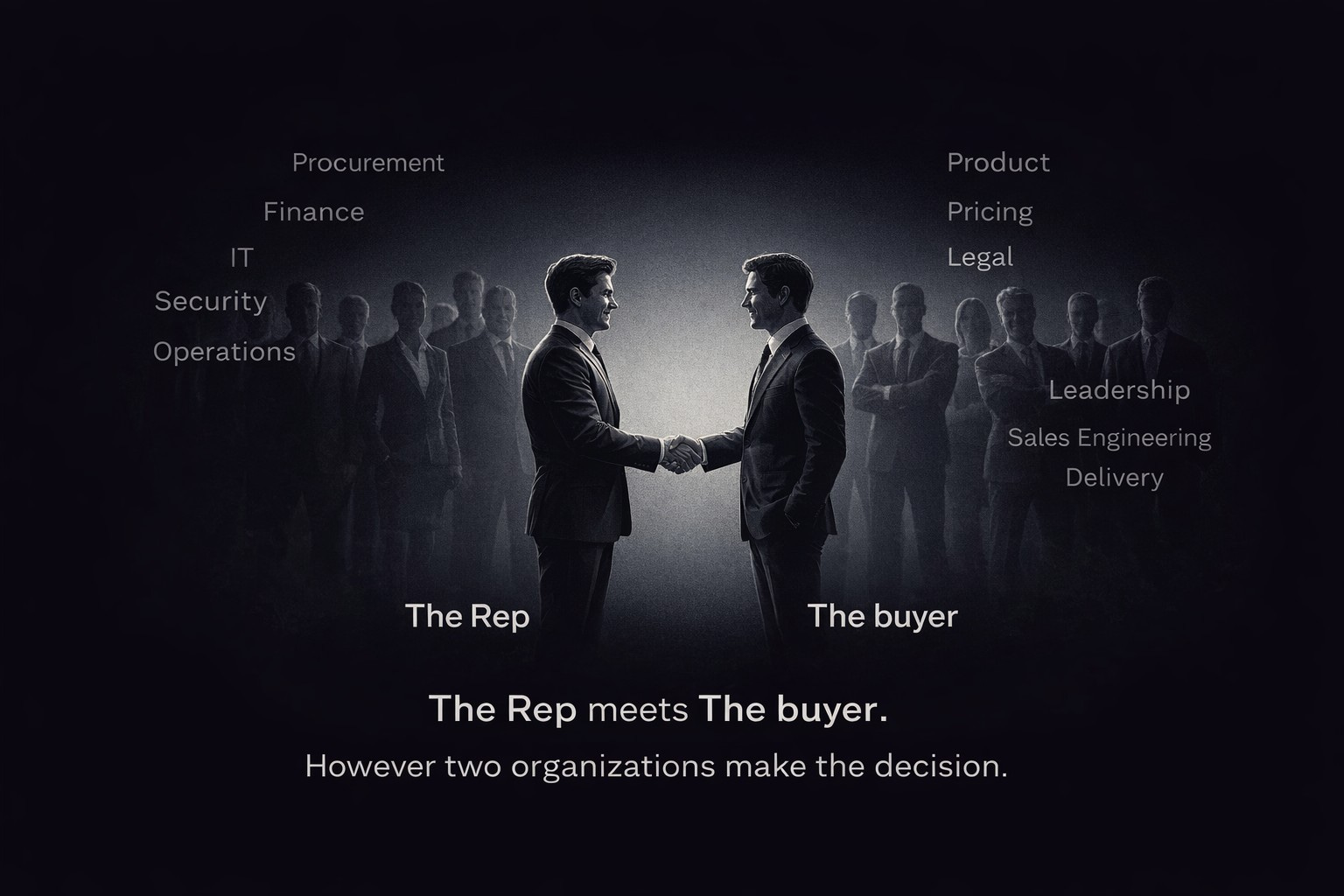
They are built around a simpler model: a Rep and a Buyer. A discovery call. A qualification framework. A proposal. A negotiation. A close.
Clean. Linear. And largely fictional.
What a Deal Actually Is
What we call a “deal” is almost never the decision of a single buyer.
It is the result of something far more complex: forces converging inside a customer organization until change becomes internally acceptable.
When risk feels manageable.
When dependencies align.
When internal stakeholders find a position that preserves their own interests.
Understanding this changes everything about how you approach selling.
Organizations Are Not Rational Machines
Sales frameworks tend to assume that companies behave like rational decision systems.
A problem is identified.
Solutions are evaluated.
The best option wins.
Anyone who has spent time in enterprise sales knows reality looks very different.
Deals stall for months even when the business case is obvious.
Strong solutions lose to weaker incumbents.
Procurement processes appear long after the real decision has already been made.
These behaviors are often interpreted as dysfunction.
They are not random.
They reflect the way organizations actually function.
Researchers across several disciplines have studied these dynamics for decades.
Sociologist Richard M. Emerson described power inside organizations as a function of dependency: the more one party depends on another, the more influence the other holds. It follows that change - any change - threatens those dependency structures. Which is why organizations resist it even when resistance is costly.
Social psychologist John T. Jost demonstrated something equally counterintuitive: people tend to defend existing systems even when those systems work against them. He called it system justification. In a sales context, it explains why rational buyers protect irrational processes - and why a superior solution is not always enough.
Economist Andrei Shleifer showed how managerial structures become entrenched over time - protecting internal positions and decision processes regardless of performance. The implication for sales is direct: the person you are selling to may have every reason to buy, and still have more to lose internally by moving than by staying still.
Different disciplines. Different contexts.
The same conclusion.
Organizations do not behave like decision machines.
They behave like human systems - systems that seek stability, protect internal balances, and move cautiously when change threatens existing structures.
The Rep’s Actual Job
If organizations behave this way, the implication for B2B Rep is significant.
A deal does not move because a Rep presented a compelling solution.
It moves when the customer organization reaches a point where change becomes internally possible.
The Rep’s role is not simply to persuade.
It is to understand.
Where influence actually sits.
Where resistance lives.
Where alignment might eventually appear - and what it would take to get there.
This is what separates Reps who push deals forward from those who watch them quietly stall.
Before Looking at the Customer
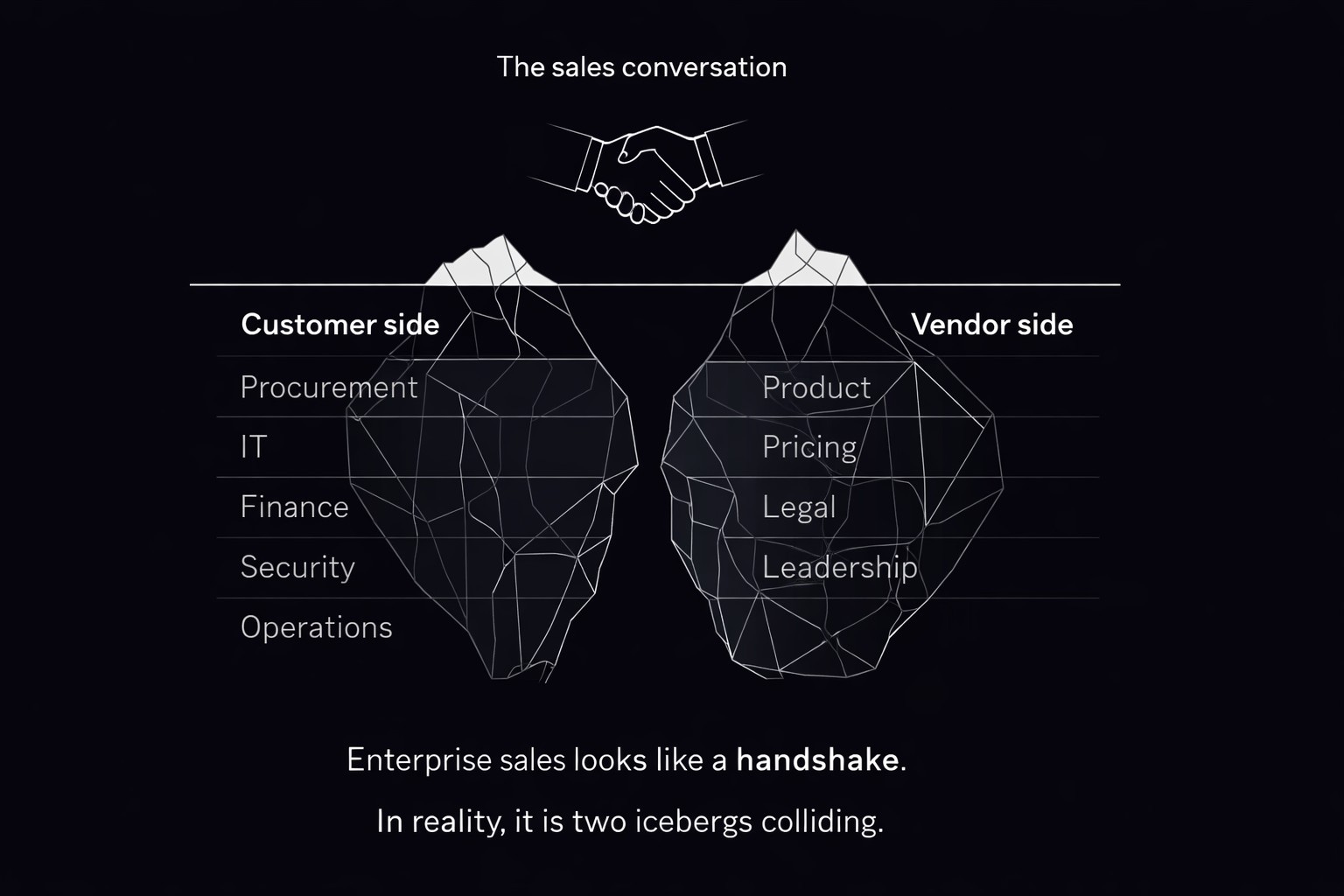
It is tempting to think these dynamics exist only inside customer organizations.
They do not.
The same forces operate inside the vendor organization.
Pricing approvals.
Product roadmaps.
Resource allocation.
Strategic priorities.
These decisions rarely follow a purely rational model either. They reflect internal dependencies, competing objectives, and the balance of influence between teams.
Experienced Reps eventually learn that most complex deals require navigating two systems simultaneously:
the customer organization
and their own.
Enterprise sales is not the interaction between a Rep and a Buyer.
It is the interaction between two organizations.
Understanding how those systems actually behave is often the difference between a deal that closes and one that was never really alive.
What Comes Next
In the coming articles, we will examine several of these organizational dynamics in more detail - from why buyers defend broken systems to how power actually operates inside complex buying environments.
None of these ideas originate in traditional sales literature.
They come from sociology, psychology, and organizational economics.
Yet they describe enterprise sales with surprising precision.
#EnterpriseSales #B2BSales #SalesStrategy #OrganizationalDynamics